STEPHANIE WEST CONSULTANT OPHTHALMIC SURGEON
Specialist squint, double vision and children’s eye care in Southampton
Previous Squint Surgery or Looking for a Second Opinion?
If your eyes have drifted again after previous surgery, or you have been told that nothing further can be done, a specialist reassessment may identify useful treatment options.
Revision squint surgery can be successful, but previous operations may alter the eye muscles and create scar tissue. Careful assessment, realistic expectations and an individualised plan are particularly important.

A recurrent squint does not necessarily mean the first operation failed
Eye alignment can change throughout childhood and adult life. A squint may recur gradually because the underlying condition evolves, the visual system changes, tissues stretch or another eye movement disorder develops.
Some patients need no further treatment. Others benefit from prism glasses, botulinum toxin or another operation.
Who may be at greater risk of needing further treatment?
Some types of squint have a higher lifetime chance of requiring additional treatment. This may mean observation, prisms, Botox or further surgery rather than another operation being inevitable.
Large or complex deviations
Very large or combined horizontal and vertical deviations may need staged treatment.
Infantile and childhood esotropia
Alignment can evolve as children grow and later change again.
Intermittent exotropia
The eye can drift out again over time, even after a good initial result.
Cranial nerve palsies
Third, fourth and sixth nerve palsies may require customised or staged surgery.
Thyroid eye disease
Restriction and changing alignment can reduce predictability until stable.
Trauma or retinal surgery
Orbital scarring, fractures and scleral buckles may alter anatomy.
Multiple previous operations
Each procedure can increase complexity and reduce untouched muscle options.
Unstable measurements
Treatment may need to wait until the pattern is clearer.
Scar tissue and revision surgery
Every operation produces healing, and some scar tissue is normal. After previous procedures, tissues may be less elastic, muscle positions may have changed and normal anatomical planes can be harder to identify.
Scar tissue may make surgery take longer and reduce predictability. It can also increase restriction in some cases. This does not mean revision surgery cannot be successful; it means planning and expectations are especially important.
- Operative notes are particularly helpful where available
- Adjustable sutures may be useful in selected adults
- Scar tissue may need to be released before repositioning a muscle
- Each further procedure can increase complexity
What happens during a second-opinion assessment?
A revision assessment is often more detailed than a routine squint appointment. It may include:
- Full orthoptic measurements at distance and near
- Assessment in different gaze positions and head postures
- Review of previous operations and operative notes
- Previous photographs and old spectacle prescriptions
- Binocular vision, fusion and prism testing
- Assessment of restriction, scar tissue or muscle slippage
- A discussion of realistic functional and cosmetic goals
Botulinum toxin in adults
Botulinum toxin, often called Botox, can be useful for selected adults with recurrent or residual squint. It temporarily weakens a chosen eye muscle and may be used as treatment, to relieve double vision while measurements stabilise, or as a diagnostic trial before surgery.
When can Botox be useful?
- A small residual deviation after previous surgery
- A recently recurrent squint that is still changing
- When the patient wishes to avoid or delay another operation
- When extensive scarring makes further surgery less attractive
- To test whether improved alignment relieves double vision
- To help estimate the likely response before definitive surgery
Botox is not suitable for every squint. Its effect is usually temporary. Possible temporary effects include a drooping eyelid, vertical deviation or overcorrection.
Treatment options after previous squint surgery
Observation
Monitoring may be safest when the deviation is small or stable.
Prism glasses
Prisms can relieve double vision and may avoid or postpone surgery.
Botulinum toxin
Botox may improve alignment or help guide future decisions.
Revision squint surgery
Surgery may include scar release and tailored repositioning of one or more muscles.
When I may advise against further surgery
Another operation is not always the best option. Observation, prisms or Botox may be preferable if the residual squint is small, measurements are unstable, the risk from additional scarring outweighs the likely benefit, or double vision is better controlled without surgery.
My aim is to recommend the treatment most likely to provide the best long-term functional and cosmetic outcome.
Frequently asked questions
Yes. Many patients undergo successful second or subsequent procedures, although complexity may increase.
Every operation causes some healing and scar formation. The amount varies, but repeated surgery can increase tissue complexity.
Results may be less predictable with altered anatomy or extensive scarring, but worthwhile improvement is often possible.
Sometimes. In selected adults it can provide symptom relief or useful alignment improvement.
They are very helpful but not essential. Old photographs and clinic correspondence can also help.
No. Squints can change over time and more than one reasonable treatment approach may exist.
Specialist squint care — easier to reach than you may think
Patients travel to Southampton from across the UK and overseas for specialist assessment and treatment of adult squint, double vision, complex eye movement problems and previous squint surgery. A video consultation can often be arranged first, helping us review your history and plan the most useful next steps before you travel.
Start with a video consultation
Your first appointment may be held by secure video. This is particularly helpful for patients travelling a long distance or coming from overseas.
Before the consultation, you can share previous clinic letters, orthoptic measurements, glasses or prism prescriptions, scan reports and earlier squint surgery records. This helps us understand your condition and decide what assessment or treatment may be appropriate.
Straightforward UK travel
Southampton has direct rail services from London Waterloo and good connections from across southern England, the Midlands, Wales and the South West.
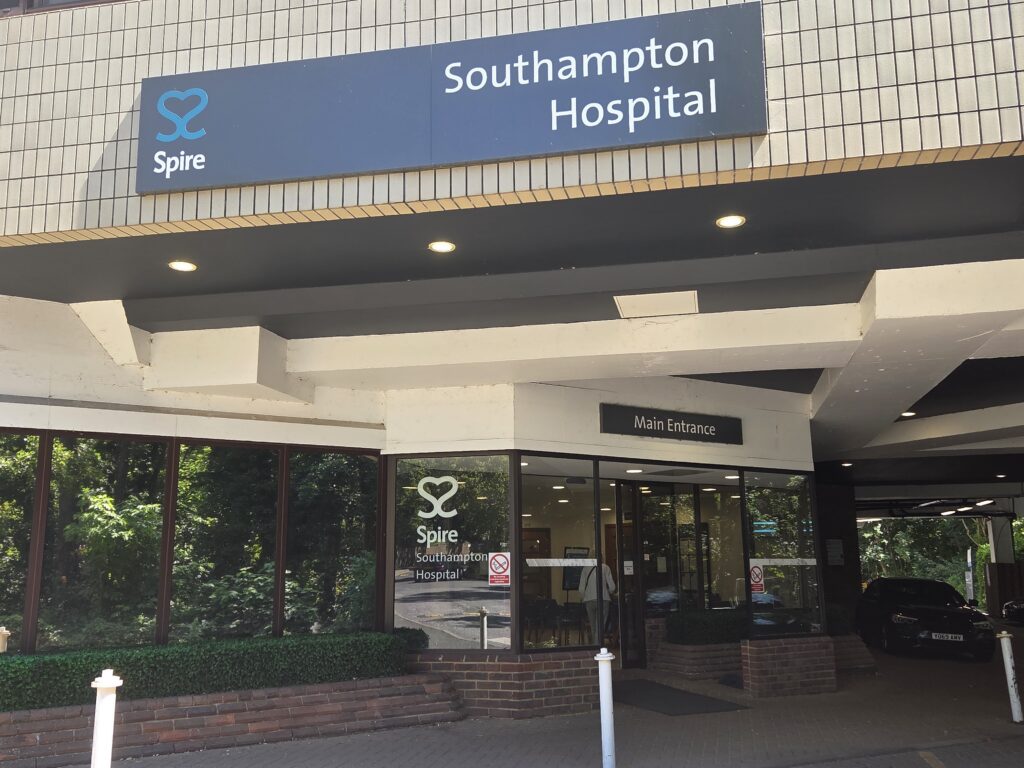
Spire Southampton Hospital is approximately a 10-minute taxi journey from Southampton Central station. It is also easily reached by road using the M3 and M27, with on-site patient parking.
International patients welcome
Southampton International Airport is approximately 15 minutes by taxi from the hospital and is immediately beside Southampton Airport Parkway railway station.
Patients arriving through Heathrow or Gatwick can continue to Southampton by rail, coach or car. Appointments can be coordinated wherever possible to reduce unnecessary journeys and make the visit as efficient as possible.
Travelling a long distance?
Contact us before booking travel. We can advise whether a video consultation would be useful first and which medical records or measurements to send securely for review.



You do not necessarily have to live with a recurrent squint
A specialist second opinion can clarify why the eye position has changed, whether further treatment is appropriate and what level of improvement is realistic.
Please contact your insurer before booking to confirm your cover and obtain any required authorisation.