STEPHANIE WEST CONSULTANT OPHTHALMIC SURGEON
Specialist squint, double vision and children’s eye care in Southampton
Red, itchy or sore eyes in children
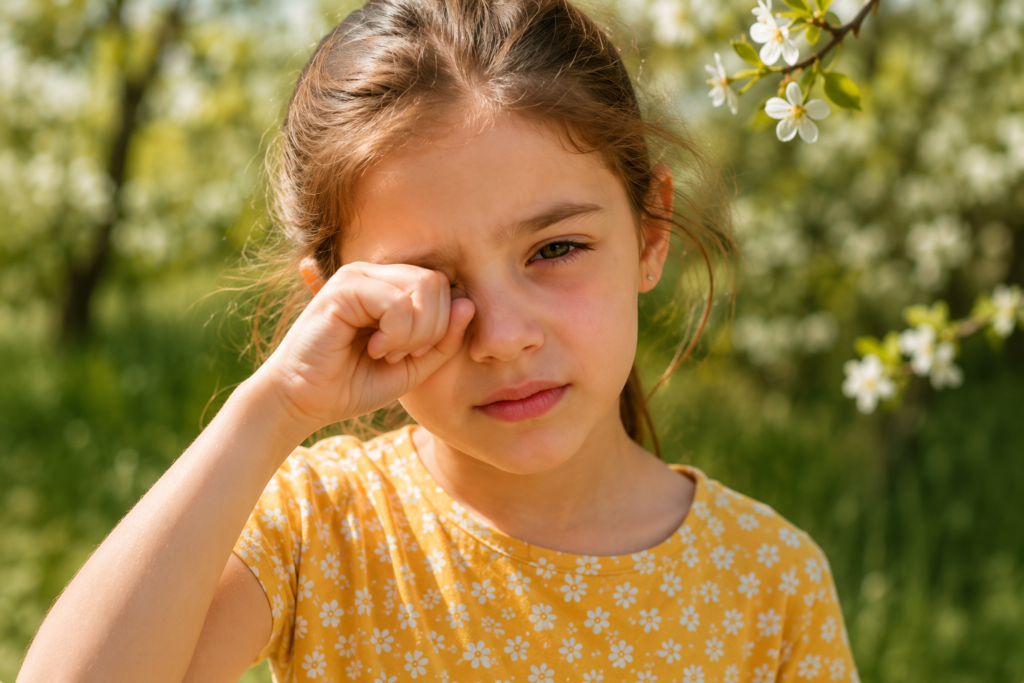
Red eyes in children are often caused by allergy or a minor infection. However, persistent inflammation, pain, light sensitivity or reduced vision needs careful assessment.
This page explains the common causes, how allergic eye disease is treated and when to seek urgent help.
When a red eye needs urgent assessment
Seek urgent medical advice if your child has any of the following:
- severe eye pain or marked distress
- sensitivity to light
- blurred or reduced vision
- a cloudy or white-looking area on the clear front of the eye
- significant swelling around the eye, fever or a child who is very unwell
- an eye injury, chemical splash or suspected foreign body
- a painful red eye while wearing contact lenses
- a red eye in a newborn baby
Do not wait for a routine appointment if vision appears affected.
Not all red eyes are the same
Allergic eye disease
Usually very itchy and watery, often affecting both eyes. Symptoms may be seasonal or present throughout the year.
Viral conjunctivitis
Often watery and associated with a cold. It may begin in one eye and spread to the other.
Bacterial conjunctivitis
More likely to cause sticky yellow or green discharge and eyelids that are stuck together after sleep.
Other causes
Blepharitis, a foreign body, corneal injury, uveitis and childhood illnesses can also make an eye red.
Allergic eye disease in children
Allergic conjunctivitis is a common cause of red, watery and itchy eyes. Mild cases may occur with hay fever, while some children develop persistent or severe inflammation such as vernal keratoconjunctivitis (VKC).
Typical symptoms include:
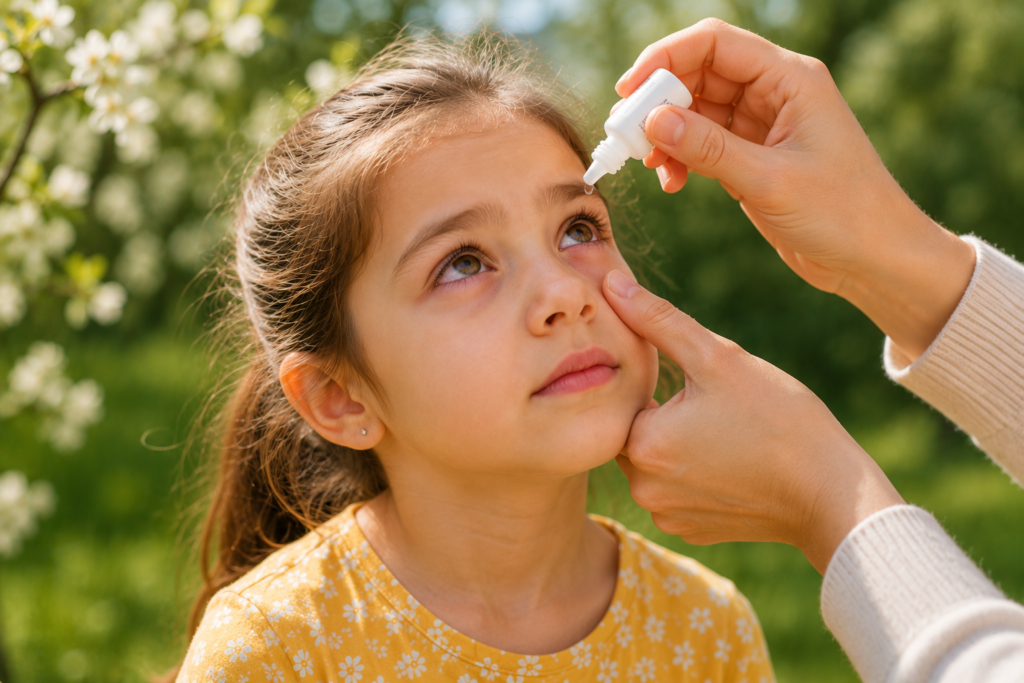
- intense itching and frequent eye rubbing
- watering, redness and puffy eyelids
- stringy or sticky mucus
- light sensitivity
- blurred vision or difficulty keeping the eyes open in more severe cases
Why treatment matters
Break the itch–rub cycle
Rubbing makes inflammation worse. Frequent vigorous rubbing is also associated with corneal problems such as keratoconus.
Protect the cornea
Severe allergic inflammation can affect the clear cornea, causing pain, light sensitivity, ulcers or scarring and, rarely, permanent loss of vision.
Keep children learning and sleeping
Well-controlled symptoms can improve comfort, sleep, concentration, outdoor activity and school attendance.
How allergic eye disease is treated
Avoid triggers and soothe
Cold compresses, preservative-free lubricants, washing pollen from the face and hair, and avoiding eye rubbing.
Anti-allergy eye drops
Antihistamine and/or mast-cell stabilising drops are often the main treatment for mild or moderate allergic conjunctivitis.
Short supervised steroid courses
Steroid drops can rapidly settle significant inflammation but require ophthalmic supervision because prolonged use may raise eye pressure or cause cataract.
Steroid-sparing treatment
Verkazia® (ciclosporin) may be used for severe VKC in children aged 4–18. Protopic® (tacrolimus ointment) is sometimes used by specialists off-label around the eyelids or for severe ocular allergy.
Working with paediatric allergy specialists
Eye allergy can occur alongside hay fever, eczema, asthma or food allergy. For children with significant or complex allergic disease, we work closely with paediatric allergy doctors so that eye symptoms and the child’s wider allergic condition are managed together.
Some children may benefit from allergy testing, better control of associated eczema or asthma, or consideration of allergen immunotherapy. Immunotherapy is not suitable for every child and is assessed and prescribed by an allergy specialist.
Viral or bacterial?
Viral conjunctivitis
Viral conjunctivitis commonly occurs with coughs, colds or sore throats. The eye is usually red and watery and symptoms may spread from one eye to the other.
What helps: cool compresses, lubricating drops, careful handwashing and avoiding shared towels or pillows. Antibiotics do not treat viruses.
Arrange review if there is pain, light sensitivity, reduced vision, symptoms are worsening or they are not settling as expected.
Bacterial conjunctivitis
Bacterial conjunctivitis is more likely to cause yellow or green discharge, with eyelids sticking together after sleep. Many uncomplicated cases settle without treatment.
What helps: gently clean the eyelids with cooled boiled water and clean cotton pads, using a separate pad for each eye. Antibiotic drops may be recommended in selected cases.
A very young baby, an unwell child, marked swelling, pain or reduced vision needs prompt assessment.
Red eyes can be part of a childhood illness
Conjunctivitis can accompany respiratory viruses and other childhood infections. One important example is measles, which may begin with a high temperature, cough, runny nose and red, sore, watery eyes before the rash appears.
If you think your child may have measles, contact NHS 111 or your GP by telephone before attending a clinic, pharmacy or hospital. This allows arrangements to be made to reduce the risk of spreading this highly infectious illness.
Check that your child’s routine vaccinations, including both recommended MMR doses, are up to date.
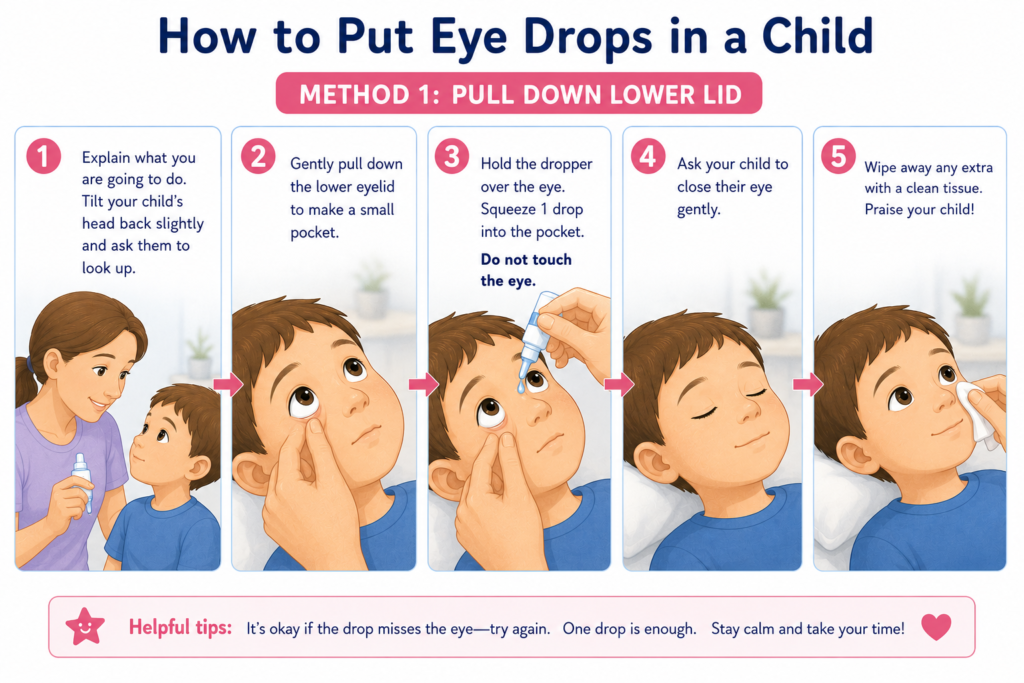
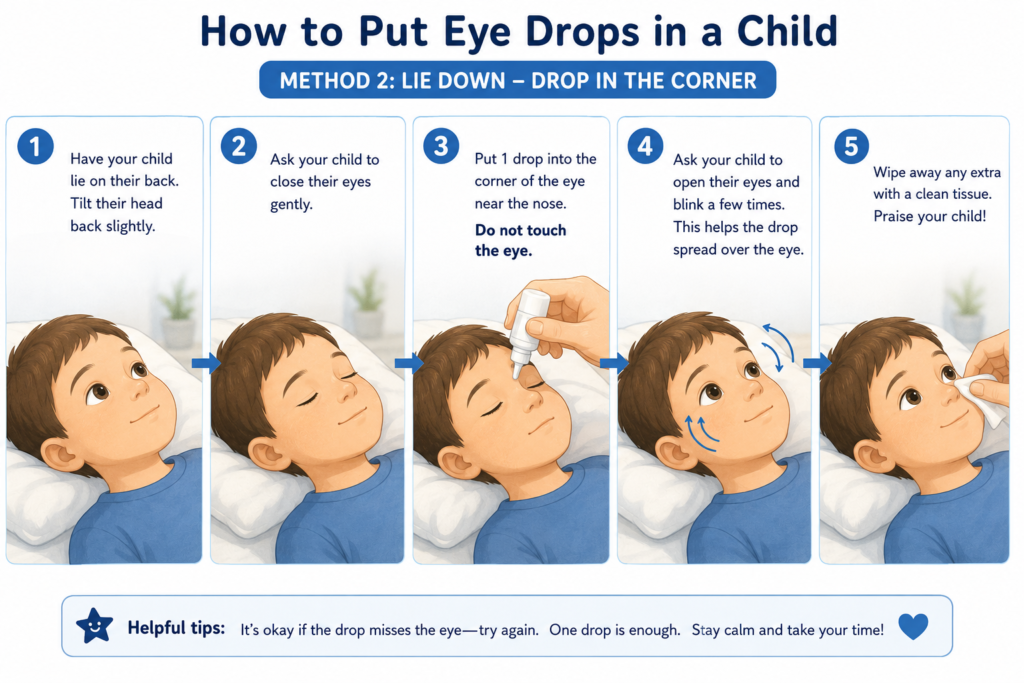
Giving eye drops to a child
Wash hands first
Wash and dry your hands. Check the label and shake the bottle if instructed.
Choose a comfortable position
Your child can lie down or tilt their head back. Gently lower the bottom eyelid to make a small pocket.
One drop is enough
Place one drop into the pocket without touching the eye, eyelashes or skin with the bottle tip.
Try the closed-eye method
For a reluctant child, place a drop at the inner corner of the closed eye. When they open the eye, the drop runs in.
Arrange an eye assessment if…
- itching or redness is persistent, recurrent or affecting sleep and school
- your child is rubbing their eyes frequently
- there is light sensitivity, pain or blurred vision
- the clear cornea looks cloudy, hazy or has a white spot
- the treatment recommended by your GP or pharmacist is not controlling symptoms
- your child needs repeated courses of steroid drops
- you are unsure whether the redness is allergy, infection or another eye condition
Frequently asked questions
Related children’s eye information
Watery eyes in children
Blocked tear ducts, cleaning, massage and when watering needs assessment.
Childhood squint
Why an eye may turn and how children are assessed and treated.
Children’s first eye appointment
What to expect when your child sees the paediatric eye team.
Concerned about your child’s red or itchy eyes?
A specialist assessment can identify the cause, check the cornea and create a treatment plan that protects comfort and vision.
Please contact your insurer before booking to confirm your cover and obtain any required authorisation.