STEPHANIE WEST CONSULTANT OPHTHALMIC SURGEON
Specialist squint, double vision and children’s eye care in Southampton
Chalazion in Children
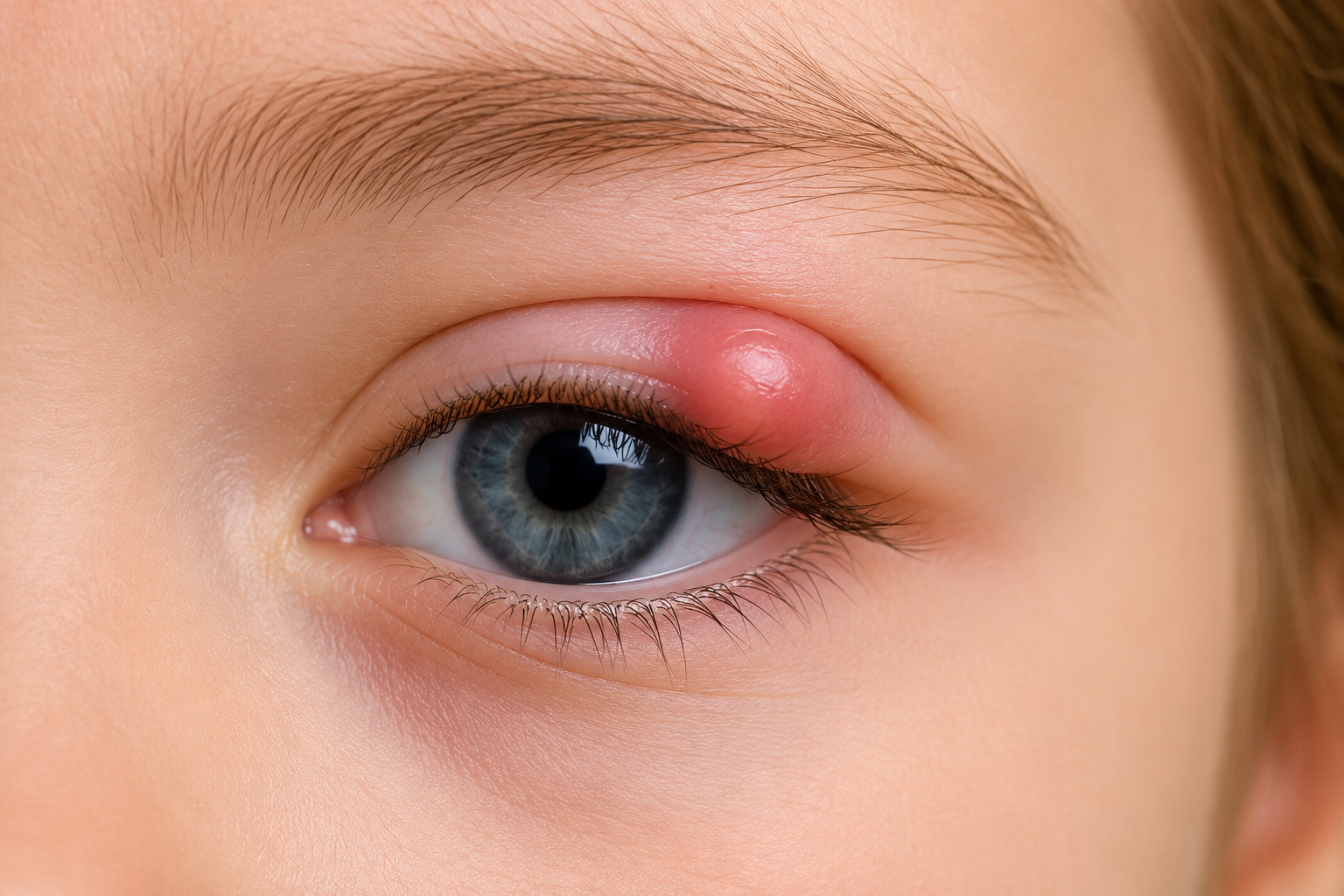
A chalazion is a small lump in the eyelid caused by a blocked meibomian oil gland. It is usually painless and often settles without surgery, although treatment may be needed if it persists, becomes inflamed or affects vision.
Chalazion: quick facts
Usually painless
A chalazion often feels like a firm eyelid lump rather than a tender infection.
Often settles naturally
Many chalazia improve over several weeks or months with conservative care.
Usually 2-8 mm
A larger chalazion can occasionally press on the eye and temporarily blur vision.
What is a chalazion?
A chalazion develops when one of the meibomian glands in the eyelid becomes blocked. These glands sit in rows within the upper and lower eyelids and release an oily layer into the tear film. This oil reduces evaporation and helps keep the surface of the eye comfortable.
When the gland opening becomes blocked, oil collects within the eyelid and produces a cyst-like lump. The plural of chalazion is chalazia.
Symptoms of a chalazion
- A small eyelid lump, commonly around 2-8 mm
- Mild irritation or discomfort when it first appears
- Occasional redness or swelling around the lump
- Temporary blurred vision if a large chalazion presses on the eye
A chalazion differs from a stye because it is usually less painful and is not primarily an infection.
Why do chalazia develop?
The gland opening may become blocked because the oil has thickened or because the eyelid margin is inflamed.
- Blepharitis or chronic eyelid inflammation
- Skin conditions such as eczema
- Thickened meibomian gland oil
- A tendency to develop recurrent blocked glands
Treating a chalazion at home
Most chalazia resolve naturally. Regular warmth and gentle massage may soften the trapped oil and encourage the gland to drain.
- Warm compress: hold a warm, damp cloth against the closed eyelid for 10-15 minutes.
- Repeat regularly: aim for three or four sessions each day while the chalazion is active.
- Gentle massage: after warming, massage the eyelid towards the eyelashes without squeezing the lump.
- Eyelid hygiene: keep the eyelid margins clean using the product or method advised by your clinician.
- Avoid eye make-up: stop using eye make-up until the eyelid has settled.
Do not squeeze or puncture a chalazion. This may increase inflammation or introduce infection.
A simple daily routine
Morning: warm compress and gentle massage.
After school: repeat if practical.
Bedtime: warm compress, massage and eyelid cleaning.
Consistency is often more helpful than pressing firmly.
When should my child be assessed?
Arrange medical advice if:
- The chalazion has not improved after several weeks of regular home treatment
- Pain, redness or swelling is increasing
- Vision seems blurred or the lump is pressing on the eye
- Chalazia keep returning
- The diagnosis is uncertain or the lump looks unusual
Seek more urgent advice
Prompt assessment is sensible if the eyelid becomes very red, hot or painful, swelling spreads around the eye, the child is unwell, or there is a noticeable change in vision.
Medical treatment
Antibiotics do not usually make an uncomplicated chalazion disappear because the lump is caused by a blocked gland rather than a bacterial infection. However, antibiotic ointment or oral antibiotics may be prescribed if there is associated infection or significant recurrent eyelid inflammation.
Steroid drops or ointment may occasionally be used to reduce inflammation when clinically appropriate.
When might surgery be considered?
Incision and curettage may be offered for a persistent chalazion that has not responded to conservative treatment, particularly when it is large, troublesome or affecting vision.
In younger children this is often performed as a short day-case procedure under general anaesthetic. In suitable older children or adults, local anaesthetic may be used.
Incision and curettage: what happens?
- The eyelid and surrounding skin are cleaned.
- Anaesthetic is given so the procedure is comfortable.
- A small clamp may be used to stabilise and expose the chalazion.
- A small opening is made, usually on the inner surface of the eyelid.
- The contents are drained and the cavity is gently curetted.
- The opening is commonly left to heal without stitches.
The procedure itself usually takes around 15-20 minutes, although the total hospital visit is longer.
Possible risks
- Bruising and swelling
- Infection, which is uncommon
- Recurrence
- Minor scarring
- Temporary alteration in eyelid appearance
No procedure can guarantee that another chalazion will not develop in the future.
Aftercare following chalazion surgery
- Clean around the eye using cooled boiled water and clean cotton wool if advised.
- Use prescribed antibiotic ointment as directed.
- A cool pack wrapped in a clean cloth may help reduce swelling.
- Mild bruising and swelling are expected for several days.
- Avoid rubbing the eye and follow the individual advice given about school, swimming and sport.
- Contact lenses are usually avoided for around one week in patients who wear them.
Reducing the chance of another chalazion
- Maintain regular eyelid hygiene if your child is prone to blocked glands.
- Use warm compresses periodically when advised.
- Treat blepharitis and relevant skin conditions.
- Remove eye make-up before sleeping in older children and teenagers.
- Discuss recurrent episodes with Stephanie, as additional treatment may be appropriate.
A healthy diet that includes sources of omega-3 may be discussed, but supplements should only be used after checking suitability for your child.
Related information
Frequently asked questions
Many chalazia settle over several weeks, but some take a few months. Regular warm compresses and massage may help.
No. A simple chalazion is a blocked oil gland and is not contagious.
No. A stye is usually an acute, tender infection near the eyelash roots. A chalazion is commonly a firmer and less painful blocked gland.
No. Squeezing or puncturing it can worsen inflammation and introduce infection.
Not usually. Antibiotics may be used when there is infection or associated eyelid inflammation, but they do not directly unblock the gland.
A large chalazion can press on the eye and temporarily blur or distort vision.
No. Most are managed with time, warmth, massage and eyelid care. Surgery is reserved for persistent or troublesome lesions.
Yes. Treating blepharitis, maintaining eyelid hygiene and using warm compresses may reduce recurrence but cannot prevent every episode.
Concerned about your child’s eyelid lump?
Arrange a specialist assessment if the chalazion is persistent, recurrent, painful or affecting vision.
Please contact your insurer before booking to confirm your cover and obtain any required authorisation.