STEPHANIE WEST CONSULTANT OPHTHALMIC SURGEON
Specialist squint, double vision and children’s eye care in Southampton
Children’s Myopia / Short-sightedness
Paediatric ophthalmology in Hampshire
Myopia, also called short-sightedness, means your child can usually see close objects clearly but may struggle to see the board at school, road signs, television or faces in the distance. This page explains what parents need to know, when to arrange an assessment and the current options for myopia management.
Child-friendly assessmentGlasses & vision adviceMyopia progression guidance
What is myopia in children?
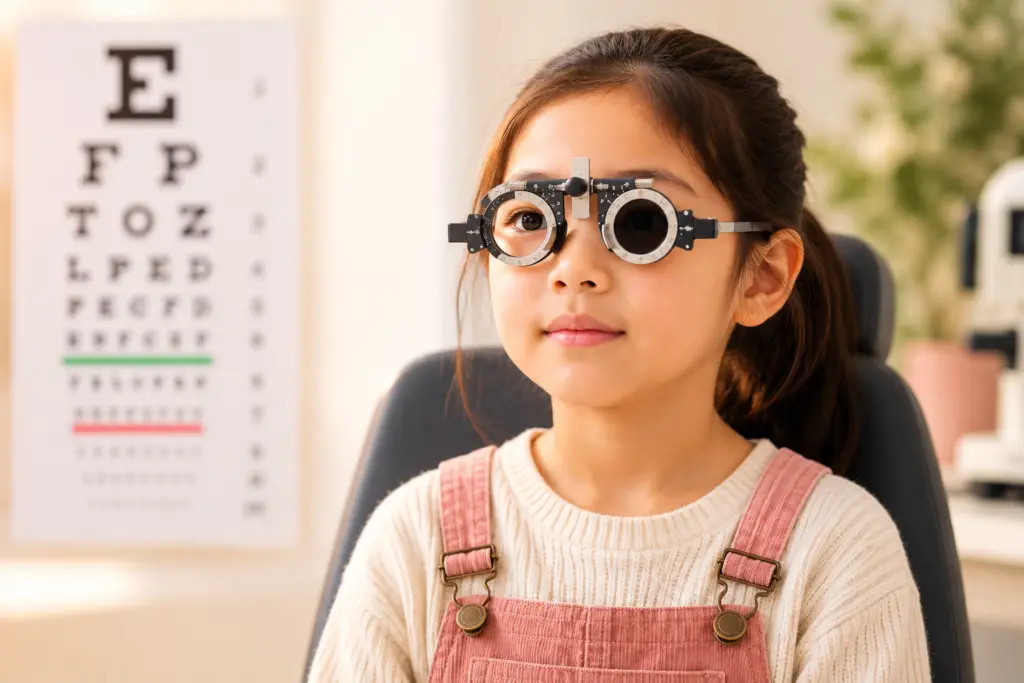
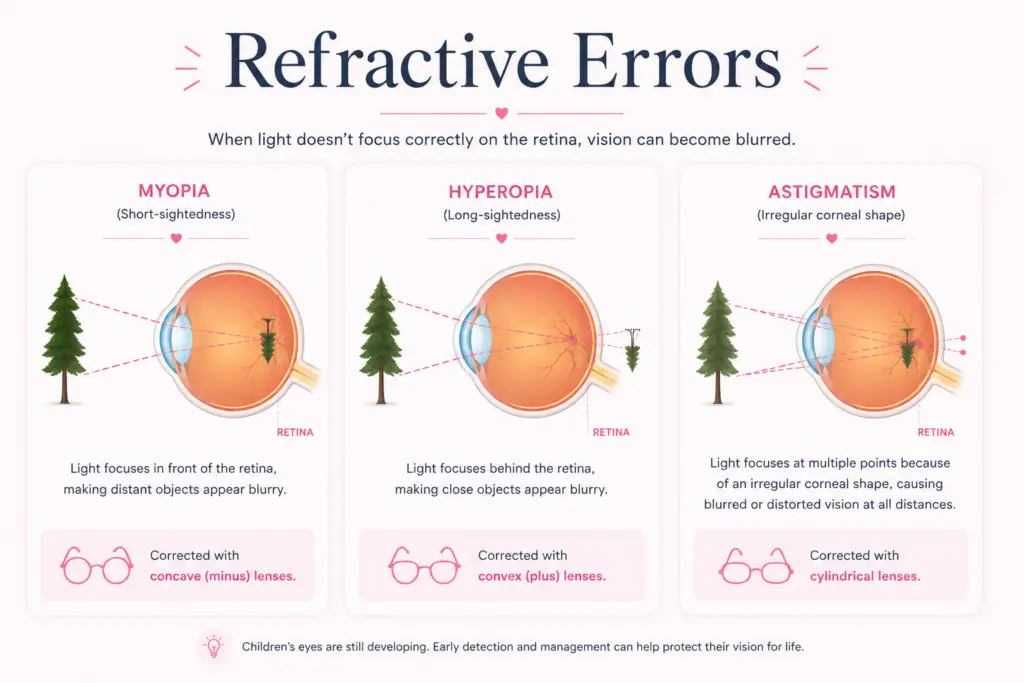
Myopia happens when the eye focuses light in front of the retina rather than directly on it. This makes distance vision blurred while near vision is often clearer. In children, myopia can progress as the eye grows, so regular review is important.
Short-sightedness is commonly corrected with glasses or, in selected older children, contact lenses. Standard glasses improve clarity, while specialist myopia management options may be considered to slow progression in some children.
Signs Your Child May Be Short-Sighted
Children do not always tell you when their vision is blurred. These common signs can suggest that your child may be struggling to see clearly in the distance.
At School
- Difficulty reading the board
- Moving closer to see screens or presentations
- Headaches or tired eyes after distance tasks
At Home
- Sitting close to the television
- Squinting to see things far away
- Complaining that distant objects look blurry
Family History
- One or both parents are short-sighted
- Myopia started early in childhood
- Your child’s glasses prescription is changing quickly
Myopia is more common when there is a family history, particularly if it begins at a young age.
Understanding Myopia
in Children
This short video explains childhood myopia, what parents may notice, and why regular monitoring is important.
Why early assessment matters
Children do not always realise that their vision is blurred, particularly if the change has been gradual. A proper eye examination checks the vision in each eye, the glasses prescription and the health of the eyes. Younger children may need dilating drops to measure the prescription accurately.
Early diagnosis helps your child see comfortably at school and allows families to discuss whether myopia management is appropriate.
Frequently Asked Questions About Myopia in Children
Helpful answers for parents about childhood short-sightedness, glasses, outdoor time, screen habits and myopia control treatment options.
Myopia, or short-sightedness, means your child can usually see close-up objects clearly but may struggle to see things in the distance, such as the board at school, road signs or the television.
Common signs include squinting, sitting close to screens, holding books close, difficulty seeing the board at school, headaches or tired eyes. Some children may not complain, so regular eye examinations are important.
Yes. Myopia often progresses during childhood and adolescence as the eye grows. Monitoring and myopia management treatments may help slow this progression.
No. Wearing the correct glasses helps your child see clearly. The myopia may still progress as the eye grows, but this is not caused by wearing glasses.
This depends on their prescription and visual needs. Many short-sighted children are advised to wear their glasses for school and distance tasks, while some may benefit from full-time wear.
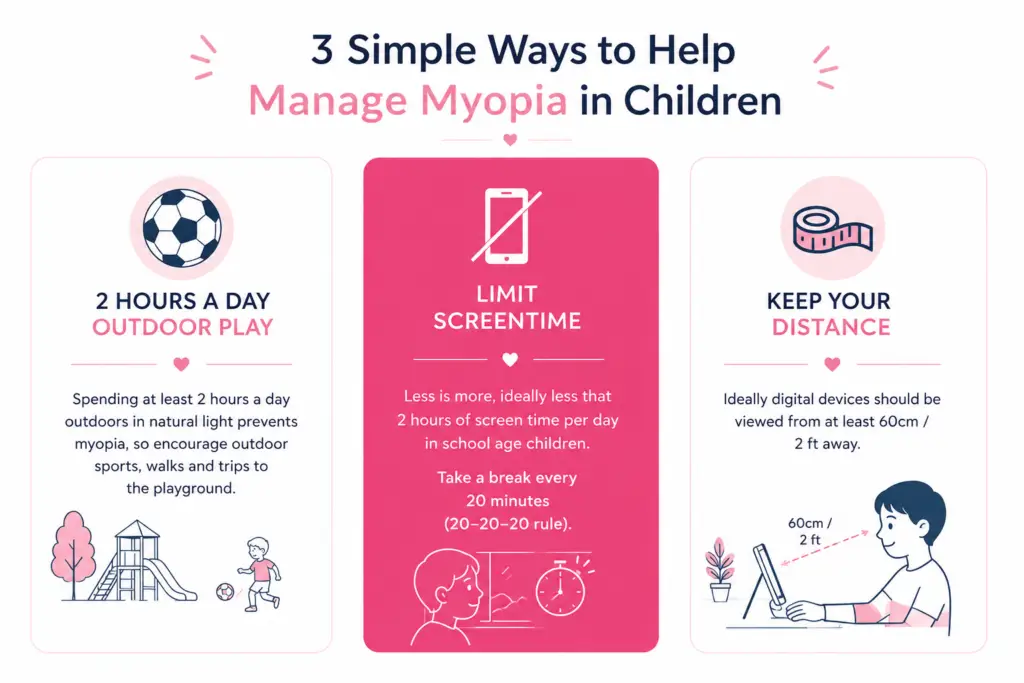
Myopia is influenced by several factors including genetics and environment. Excessive near work and reduced outdoor time are associated with a higher risk, so balance, breaks and regular outdoor activity are important.
A helpful target is around two hours outdoors each day where possible. Natural daylight may help reduce the risk of developing myopia and may help slow progression.
Depending on your child’s age, prescription and eye health, treatment options may include specialist myopia-control glasses, myopia-control contact lenses and low-dose atropine eye drops. The most suitable option will be discussed after assessment.
Glasses and contact lenses correct blurred vision but do not cure the underlying eye growth. Myopia management aims to slow progression and reduce the risk of future eye problems.
Consider arranging an assessment if your child squints frequently, struggles to see the board at school, sits very close to screens, has headaches or eye strain, has a family history of high myopia, or seems to need stronger glasses regularly.
Myopia Control Treatment Options
There is no single best treatment for every child. The right approach depends on your child’s prescription, age, eye health, rate of progression and what will realistically fit into family life.
Specialist myopia-control glasses
A child-friendly option worn like normal glasses, designed to give clear vision and help slow myopia progression.
Best suited for:
Younger children or children not ready for contact lenses.
Benefits:
Easy to wear, non-invasive and familiar.
Things to consider:
Needs consistent wear and regular review.
Myopia-control contact lenses
Specialist contact lenses may help slow myopia progression while giving clear vision without glasses.
Best suited for:
Active or older children who can manage lens hygiene.
Benefits:
Useful for sport and can improve confidence.
Things to consider:
Requires maturity, hygiene and parental support.
Low-dose atropine eye drops
Prescription eye drops used at night in selected children to help slow myopia progression.
Best suited for:
Children whose myopia is progressing quickly, or where atropine is advised as part of a management plan.
Benefits:
Simple once-daily routine and can be used alongside glasses.
Things to consider:
May cause light sensitivity or near blur in some children; requires monitoring.
When should my child see a consultant ophthalmologist?
Many children with straightforward myopia are managed very well by a community optometrist. A consultant ophthalmologist review may be helpful where there are additional concerns, such as:
- Very young age at onset
- Rapid progression or high myopia
- Reduced vision that is not fully explained by glasses
- Squint, amblyopia or unequal prescriptions
- Concerns about the health of the eye
- A complex medical, developmental or family history
Related children’s eye conditions
Parents looking at myopia may also find these pages helpful:
Amblyopia / lazy eye Squint in children Children’s eye conditions
Book a children’s eye appointment
If you are worried about your child’s vision, glasses prescription or myopia progression, you can arrange a paediatric ophthalmology assessment with Miss Stephanie West.
Please contact your insurer before booking to confirm your cover and obtain any required authorisation.