STEPHANIE WEST CONSULTANT OPHTHALMIC SURGEON
Specialist squint, double vision and children’s eye care in Southampton
Adult squint: specialist assessment and treatment
An adult squint can affect appearance, confidence, eye comfort and vision. Whether it is longstanding, newly developed or has returned after previous surgery, a detailed orthoptic and ophthalmic assessment can clarify the cause and the treatment options.
NHS Consultant • Fellowship trained • Adults and children

Understanding adult squint (strabismus)
A squint is a condition in which the eyes are not correctly aligned and do not always point in the same direction. It may have been present since childhood or can develop for the first time in adult life. The pattern, cause and effect on vision vary from person to person, so assessment is tailored to the individual.
What is a squint?
A squint is when the two eyes are not aligned with one another. One eye may turn inwards, outwards, upwards or downwards while the other looks towards the object of interest. The deviation may be constant or intermittent.
What is the medical term for a squint?
The medical term for a squint is strabismus. Other terms, such as esotropia and exotropia, describe the direction in which an eye turns.
What causes a squint in adults?
An adult squint may be a longstanding childhood condition, a previously controlled squint that has become more noticeable, or a new eye-alignment problem. Causes vary and may include problems affecting eye movements, the nerves controlling the eye muscles, the muscles themselves, or the way the eyes work together.
Why has my eye started turning inwards?
An inward turn is called esotropia. In adults it can occur for several different reasons, so a new inward turn—particularly if associated with double vision—should be assessed to establish the cause and whether any further investigation is needed.
Why does an eye turn outwards?
An outward turn is called exotropia. It may have been present intermittently for many years or become more noticeable over time. The amount of the deviation can vary with distance, tiredness, concentration and how well the eyes are able to work together.
Can an adult squint cause double vision?
Yes. If the eyes are no longer pointing at the same object, the brain may receive two images and this can result in double vision (diplopia). Some people with longstanding squints do not experience double vision because the brain has adapted differently.
Can a squint be treated in adults?
Yes. Treatment depends on the type of squint, its cause, symptoms and the aims of treatment. Options can include glasses, prisms, treatment of an underlying condition, botulinum toxin in selected cases, and squint surgery.
Can adults have squint surgery?
Yes. Squint surgery is performed in adults to improve eye alignment and, in selected cases, to help manage double vision. Suitability depends on the individual measurements, symptoms, previous treatment and the underlying cause.
Specialist assessment for adult squint
If your eye position has changed, your squint is becoming more noticeable, or you are experiencing double vision, a detailed assessment can clarify the type and size of the deviation and help determine the most appropriate options.
Reasons adults seek specialist advice
An eye that turns
One eye may drift in, out, up or down all the time or only when tired.
Double vision
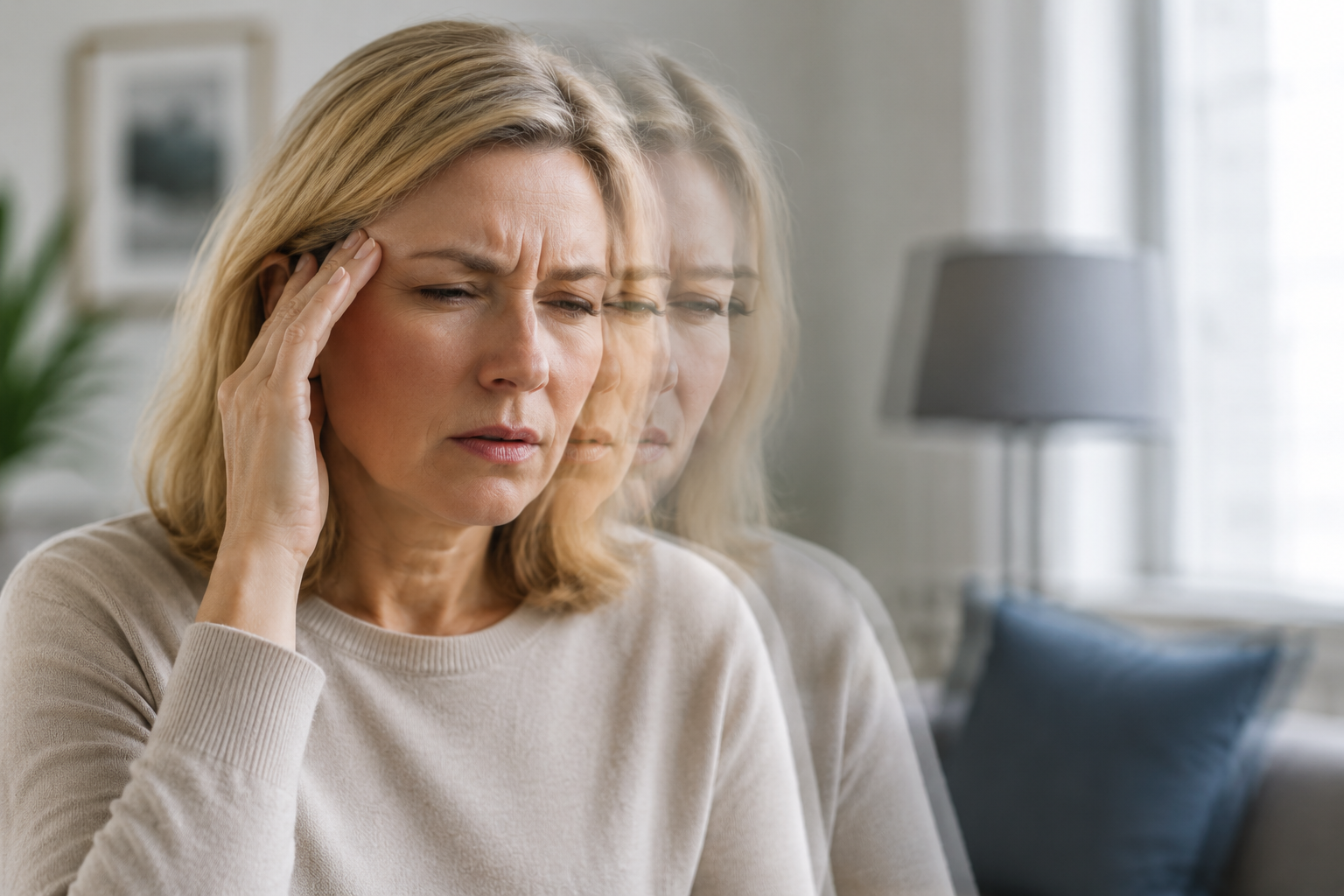
Two images, visual confusion, dizziness or difficulty judging space.
Confidence and eye contact
A visible squint can affect photographs, social situations and self-confidence.
Head posture or eye strain
You may turn or tilt your head to maintain comfortable single vision.
Previous surgery
A squint can recur or change many years after earlier treatment.
A recent change
New adult squint may need investigation for neurological, muscular or medical causes.
A precise diagnosis comes before treatment
You will usually see an orthoptist first. They measure the position and movement of each eye, assess binocular vision and determine where double vision occurs.
Stephanie then reviews the findings, examines your eyes and explains the likely diagnosis. Depending on the history, further tests or imaging may sometimes be recommended.
Types of squint and causes of double vision
Squint and double vision can develop for many different reasons. Some conditions begin in childhood, while others appear later in life or return after previous treatment. A detailed orthoptic and ophthalmic assessment helps identify the pattern, likely cause and most appropriate treatment options.
Types and patterns of squint
Squints may be described according to when they developed, how often they are present and the direction in which the eye turns.
- A squint left over from childhood
- A squint that first appears in adulthood
- An intermittent squint
- An inward-turning squint (esotropia)
- An outward-turning squint (exotropia)
- A vertical squint (hypertropia or hypotropia)
Recurrent and complex squints
Some patients need specialist assessment because the alignment has changed after earlier treatment or because the eye movement problem is unusual or difficult to manage.
- A squint that has returned after previous surgery
- Repeat or re-do squint surgery
- Persistent or unsatisfactory alignment after previous surgery
- Complex squints
- Duane syndrome
- Brown syndrome
Double vision caused by eye misalignment
Double vision often occurs when the eyes are no longer pointing in precisely the same direction. The underlying cause needs careful assessment.
- A longstanding or newly developed squint
- Fourth nerve palsy
- Sixth nerve palsy
- Third nerve palsy
- Thyroid eye disease
- Age-related eye muscle or connective-tissue changes
Double vision after injury, illness or surgery
Double vision can also follow trauma, neurological illness or surgery. These causes may require investigation alongside treatment of the eye alignment.
- Head injury
- Facial or orbital trauma
- Brain tumour or other neurological disease
- Brain or neurosurgery
- Eye surgery
- High myopia or changes associated with short-sightedness
New or sudden-onset double vision should be assessed promptly, particularly when it is accompanied by headache, weakness, facial droop, difficulty speaking, unequal pupils, eye pain or other neurological symptoms.
Start with a specialist assessment
Consultation
Orthoptic measurements
Treatment options
Surgery if appropriate
Self-pay assessment fees
New consultation
Adult orthoptic assessment
Booking a consultation does not commit you to surgery
Not every adult squint needs surgery
Updated glasses
Correcting refractive error can reduce strain and sometimes improve control.
Prisms
Temporary or permanent prisms can bring images together and relieve double vision.
Botulinum toxin
Botox can temporarily weaken an eye muscle and may be diagnostic or therapeutic.
Squint surgery
Eye muscles are repositioned to improve alignment, function and appearance.
Exercises
Useful for selected binocular vision problems such as convergence insufficiency.
Observation
Some recent-onset problems improve while the underlying condition stabilises.
How Botox may help a squint
In this short interview, Stephanie explains what a squint is and how botulinum toxin can be used in selected patients.
Adult squint FAQs
No. Adults of any age may benefit from assessment and treatment when clinically appropriate.
No. Surgery may improve alignment, double vision, abnormal head posture, eye strain and confidence. The goals are individual.
Yes. Alignment can change with age, illness, changes in glasses prescription or reduced ability to control a longstanding deviation.
Some adult operations benefit from an adjustable technique, particularly when precise postoperative alignment is important. It is not required for every patient.
Private patients can usually self-refer. Insured patients should check their insurer’s requirements and obtain authorisation where necessary.
Find out which treatment options may help your squint
Self-referrals, professional referrals and insured patients are welcome.
Please contact your insurer before booking to confirm your cover and obtain any required authorisation.