

Squints in Children

A child’s eye may turn inwards, outwards, upwards or downwards. Because every squint is different, assessment focuses on vision, alignment, eye movements and how well the eyes work together.

Smiling young child with an inward-turning eye (esotropia), illustrating a childhood squint.

What is a squint?

A squint, or strabismus, means the eyes do not point in the same direction. Although some squints are constant, others only appear when a child is tired, daydreaming, focusing closely or looking into the distance.

  • An inward turn is called esotropia
  • An outward turn is called exotropia
  • One eye may sit higher or lower
  • The turn may alternate between the eyes

How is a childhood squint assessed?

First, an orthoptist measures vision, eye alignment, eye movements and 3D vision. Next, Stephanie examines the eyes and may use dilating drops to measure the full glasses prescription. Finally, the findings and treatment choices are explained clearly.

  • Vision in each eye
  • Alignment at near and distance
  • Eye movements and head posture
  • Glasses prescription
  • Assessment for amblyopia
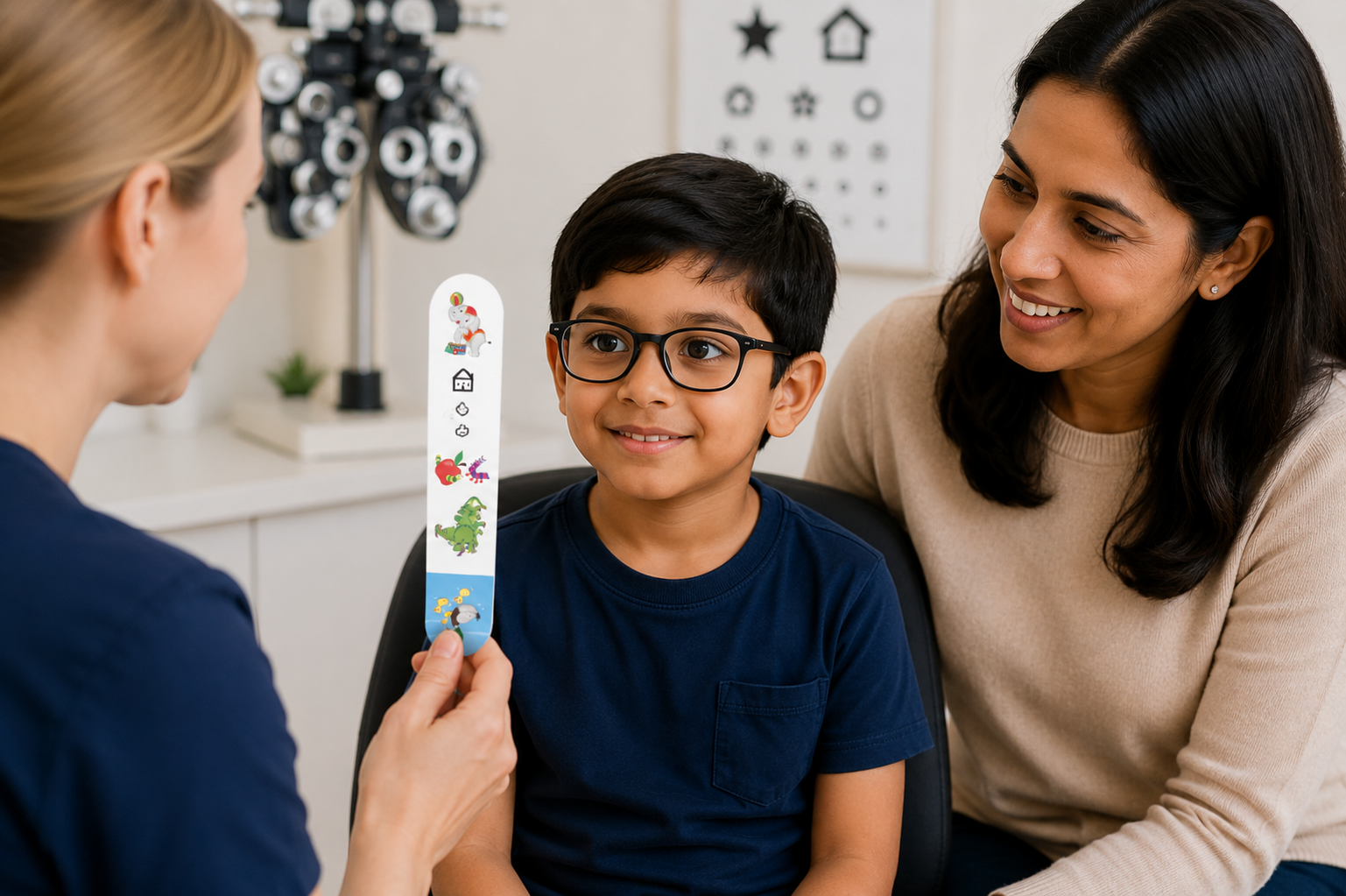
Orthoptist assessing a smiling child with glasses using a colourful fixation stick while a parent watches during a children's eye examination.

Treatment for squints in children

Treatment does not always mean surgery. Instead, the aim may be to improve vision, support binocular function, reduce an abnormal head posture or make the squint less noticeable.

  • Glasses for focusing-related squints
  • Patching or atropine for amblyopia
  • Monitoring where control remains good
  • Exercises for selected convergence problems
  • Botulinum toxin in selected cases
  • Squint surgery when appropriate
Smiling child wearing glasses to correct accommodative esotropia, with both eyes straight and well aligned.

Video: understanding childhood squints

Related children’s eye information

Accommodative esotropia

Why long-sighted children may develop an inward squint.

Intermittent exotropia

Why an eye may drift out when a child is tired.

Squint surgery

What happens before, during and after surgery.

Frequently asked questions

Some intermittent squints remain stable; however, a persistent or increasing turn should be assessed rather than assumed to resolve.

No. Treatment may involve glasses, amblyopia treatment, monitoring, exercises, botulinum toxin or surgery.

Yes, particularly in accommodative esotropia caused by long-sightedness.

No. Surgery changes alignment but does not directly treat amblyopia or remove the need for glasses.

Children with intermittent exotropia often close one eye in bright light, although other causes are possible.

Specialist care for your child’s squint

Arrange a calm, detailed assessment with Stephanie and the orthoptic team.

Recognised by major insurers
bupa AXA Health Vitality WPA Cigna Aviva
Benenden Health
Healix
Simplyhealth
The Exeter
Vanbreda

Please contact your insurer before booking to confirm your cover and obtain any required authorisation.