STEPHANIE WEST CONSULTANT OPHTHALMIC SURGEON
Specialist squint, double vision and children’s eye care in Southampton
CHILDREN’S EYE CARE
Watery eyes in babies and children
A constantly watery or sticky eye in a baby is very common. Most often it is caused by a tear duct that has not fully opened—and, reassuringly, most improve naturally as your child grows.

Why is my child’s eye watering?
Tears normally drain through tiny openings at the inner corners of the eyelids, into the tear sac and then down the nasolacrimal duct into the nose. In some babies, a thin membrane at the lower end of this duct has not opened completely at birth. Tears then collect or overflow, and mucus may cause the lashes to become sticky—particularly after sleep or during a cold.
This is called congenital nasolacrimal duct obstruction, often simply described as a blocked tear duct. It may affect one or both eyes and does not usually harm sight.
Common signs
- A tear-filled eye or tears running down the cheek
- Sticky lashes, especially on waking
- Clear, white, yellow or green mucus at the inner corner
- Symptoms that become more noticeable during colds
Most get better naturally
Most blocked tear ducts open as the drainage system develops. Around 8 in 10 have resolved by the first birthday in a large population-based study. Even among babies whose watering remained at 6–10 months, a PEDIG multicentre study found that 66% resolved without surgery during the following six months.
Improvement can continue during the second year of life. A prospective UK study of children whose obstruction had persisted into their second year found that 60% of the eyes observed without a procedure resolved before age two. Taken together, the evidence supports telling parents that around 9 in 10 or more affected children are likely to improve naturally by age two, although estimates vary between studies and a persistent blockage becomes less likely to clear as a child gets older.
What can I do at home?
Keep the eye clean
Wash your hands, then gently wipe away tears or mucus with clean cotton wool or a soft pad moistened with clean water. Use a fresh pad for each wipe and a separate pad for each eye. Pat the surrounding skin dry.
Antibiotics are usually unnecessary
A sticky eye does not automatically mean infection. If the white of the eye remains white and your child is otherwise well, antibiotic drops are generally not needed. They do not open the blocked duct. Seek advice if the eye itself becomes red or inflamed.
How to do Crigler massage
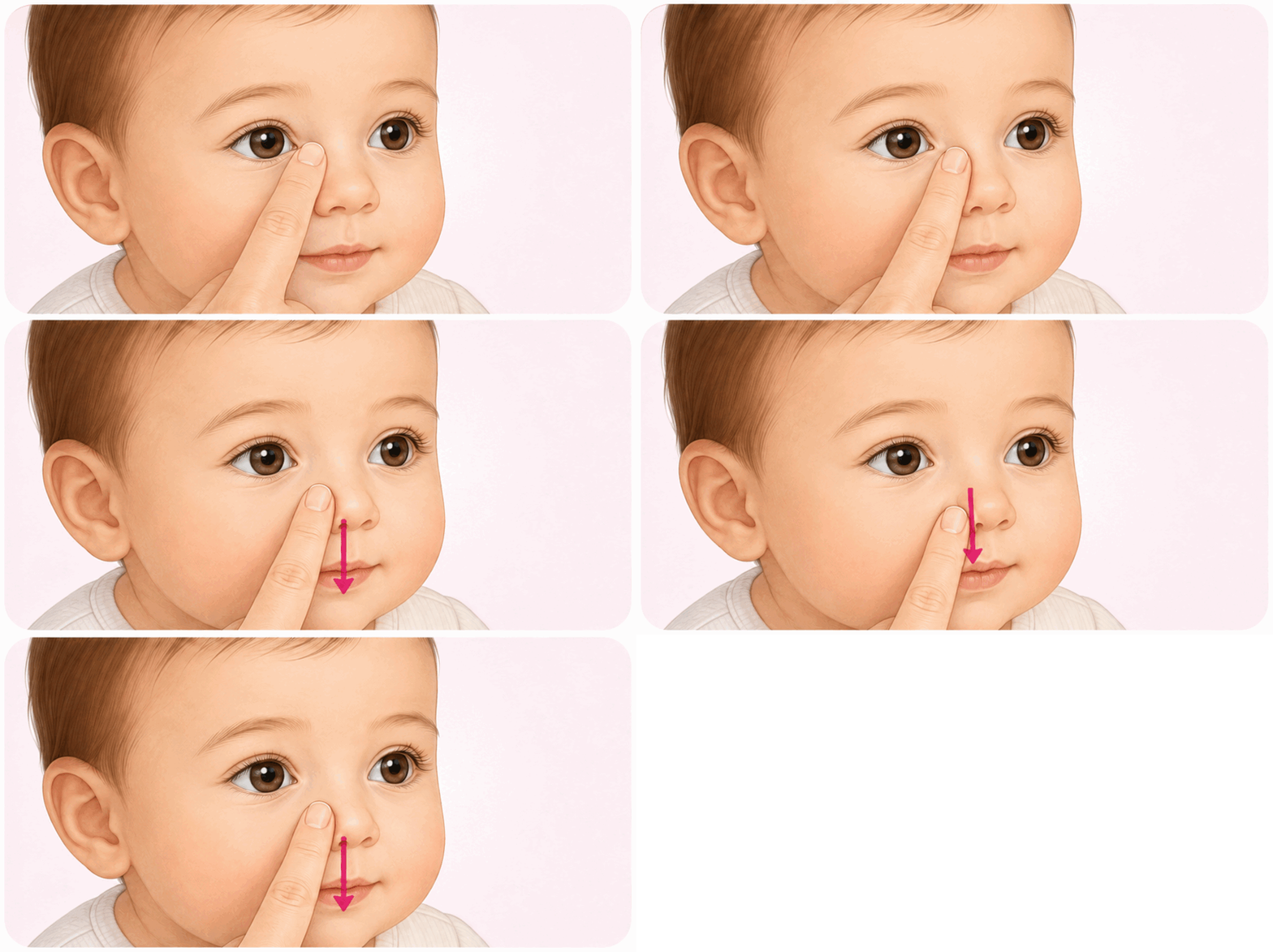
- Wash and dry your hands.
- Place a fingertip over the tear sac beside the inner corner of the eye—not on the eyeball.
- Press firmly and sweep downwards along the side of the nose.
- Repeat several short strokes, as demonstrated by your clinician.
Do not massage a hot, tender or acutely swollen tear sac; seek urgent medical advice instead.
Urgent: signs of dacryocystitis
Dacryocystitis is a rare but potentially serious infection of the tear sac. Look for:
- a new red, hot, painful or tender swelling between the eye and the side of the nose
- rapidly increasing redness or swelling around the eye
- fever, unusual sleepiness, poor feeding or your child seeming generally unwell
This needs urgent same-day assessment. Please contact your local NHS eye service or attend the appropriate local NHS urgent-care/A&E service. Do not wait for a routine private appointment. Do not perform Crigler massage over an acutely inflamed swelling.
Rare but important: childhood glaucoma
A blocked tear duct is by far the more common cause of watering in a baby. Very rarely, however, persistent watering can be a sign of childhood glaucoma, in which pressure inside the eye is too high. Prompt diagnosis is important to protect sight.
Please seek an urgent assessment through your local NHS eye service if watering is accompanied by any of the following:
- marked sensitivity to light, with your baby squeezing or keeping the eye closed
- a cloudy, hazy or dull-looking front of the eye
- one eye appearing larger than the other, or both eyes seeming unusually large
- eye pain, distress or frequent eye rubbing
- persistent watering with eyelid spasm, rather than an otherwise comfortable sticky eye
- concern about reduced vision or your child not fixing on and following faces or toys normally
If the eye looks cloudy, enlarged or painful, or your baby is very light-sensitive, do not wait for a routine private appointment. Contact your local NHS eye department urgently or attend the appropriate NHS urgent-care/A&E service.
Is the eye red or itchy?
Watering with prominent itching, rubbing or redness may be caused by allergy or another form of eye irritation rather than a blocked tear duct. Read more about red eyes and eye allergies in children.
A careful children’s eye assessment
Although a blocked tear duct is the commonest explanation, watering is a symptom rather than a diagnosis. We assess your child in an age-appropriate, child-friendly way to:
- confirm that the symptoms fit nasolacrimal duct obstruction
- check vision and visual development in each eye
- examine eye alignment, eyelids, lashes, the eye surface and red reflexes
- look for irritation, allergy, infection, eyelid or lash problems
- exclude uncommon but important causes of watering, including childhood glaucoma, with additional examination or pressure measurement where indicated
You will leave with a clear explanation, practical home-care advice and an individual plan for review or referral.
What if the watering does not settle?
If troublesome watering and discharge persist, a procedure to open the tear duct may be considered. The usual first procedure is probing and irrigation under a short general anaesthetic. Depending on the child’s age, symptoms, examination and whether the drainage pathway appears more complex, other techniques such as silicone intubation may sometimes be recommended.
Spire Southampton does not provide general anaesthesia for children under three years of age. If a procedure is needed below this age—or if your child is likely to need more specialised lacrimal treatment—we will advise on onward referral to an experienced paediatric lacrimal specialist in an appropriately equipped children’s hospital. This gives your child access to the most suitable expertise and aims to maximise the chance of success while minimising the need for repeat procedures.
For children aged three and over whose needs are suitable for Spire, we can discuss treatment within its dedicated paediatric surgical pathway, including paediatric anaesthetic and nursing care.

Concerned about your child’s watery eye?
A child-friendly assessment can confirm the cause, check vision and provide a clear plan.
Please contact your insurer before booking to confirm your cover and obtain any required authorisation.